Forecasting
Dataset-driven tasks that start simply, then force the agent to preserve intent, state, constraints, and intermediate results across many steps.
Validation sets for state of the art agents
Structured problem sets built from real-world failures: brittle planning, poor recovery, unreliable tool use, and weak judgment.
Why test cases
We are building problem sets that make state-of-the-art agent weaknesses visible. Each case is grounded in issues found while testing state-of-the-art agents against practical datasets, then shaped into reproducible tasks, expected behaviors, and scoring notes.
Problem areas
Dataset-driven tasks that start simply, then force the agent to preserve intent, state, constraints, and intermediate results across many steps.
Cases where the agent must ask a clarifying question, refuse a bad assumption, or preserve user intent instead of rushing into an apparently plausible answer.
Tests that introduce stale facts, corrected requirements, hidden dependencies, or conflicting context to see what the agent keeps, drops, or invents.
Scenarios where tools error, return partial data, or contradict expectations, revealing whether the agent can verify, adapt, and recover.
Use Cases
We choose datasets and design problems based on real-world use cases that cause real-world issues. Whether it's issues for your business, your research, or your curiosity, failures in these areas are likely to lead to real-world harm, and improvements are likely to lead to real-world impact.
Impact matters. Which is why we focus on datasets that reflect real-world scenarios.
Define who would use the dataset and why they would be using it.
Challenge the agent on a variety of scenarios related to the problem domain.
Wherever the agent fails, document the circumstances and outcomes.
Workflow
Each problem set moves through the same loop: choose a scenario, configure the agent, watch execution, then review the report card.
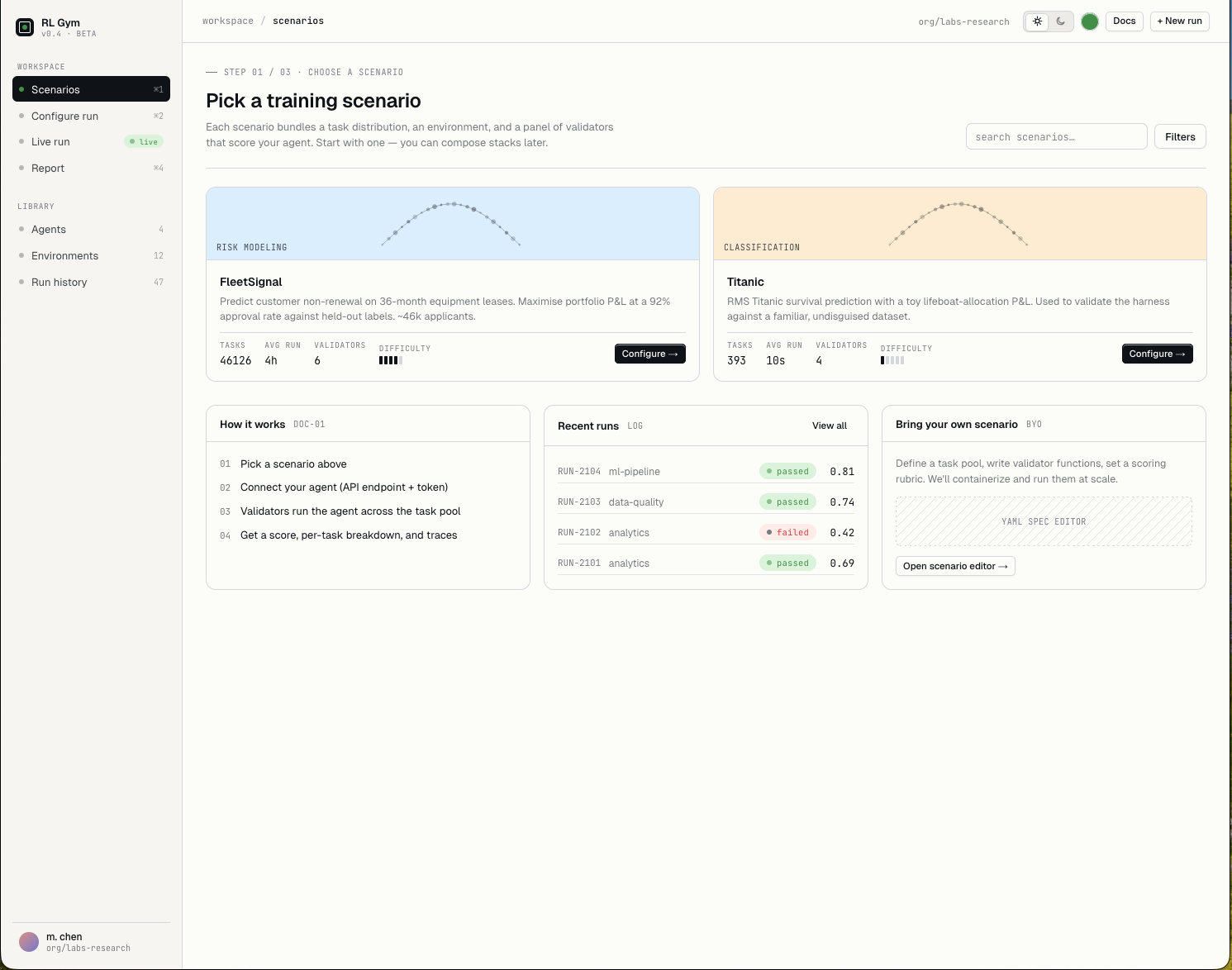
Start from a real-world dataset scenario with a task pool, environment, and validators.
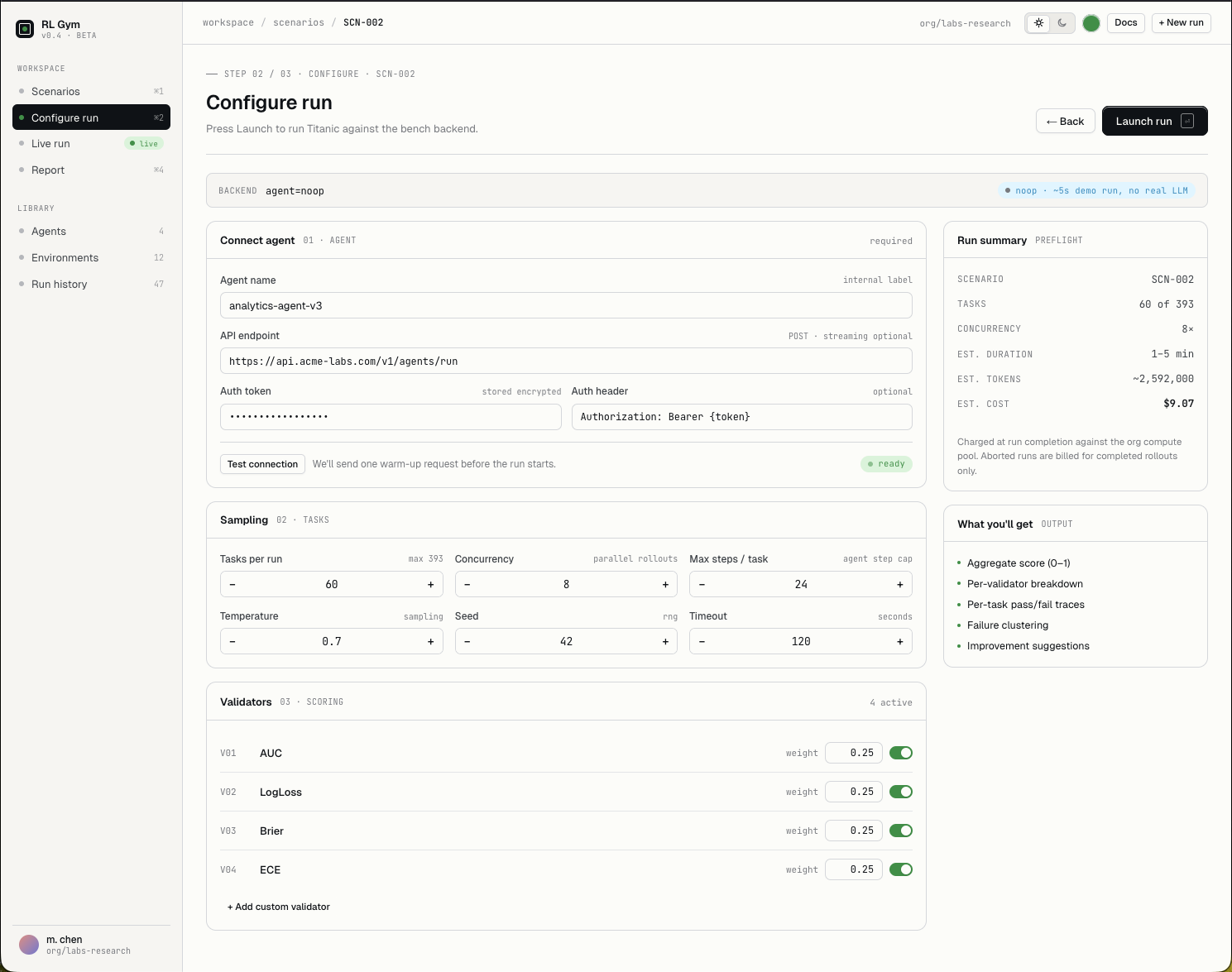
Connect your desired agent, set sampling and runtime limits, choose validators, and prepare the launch.
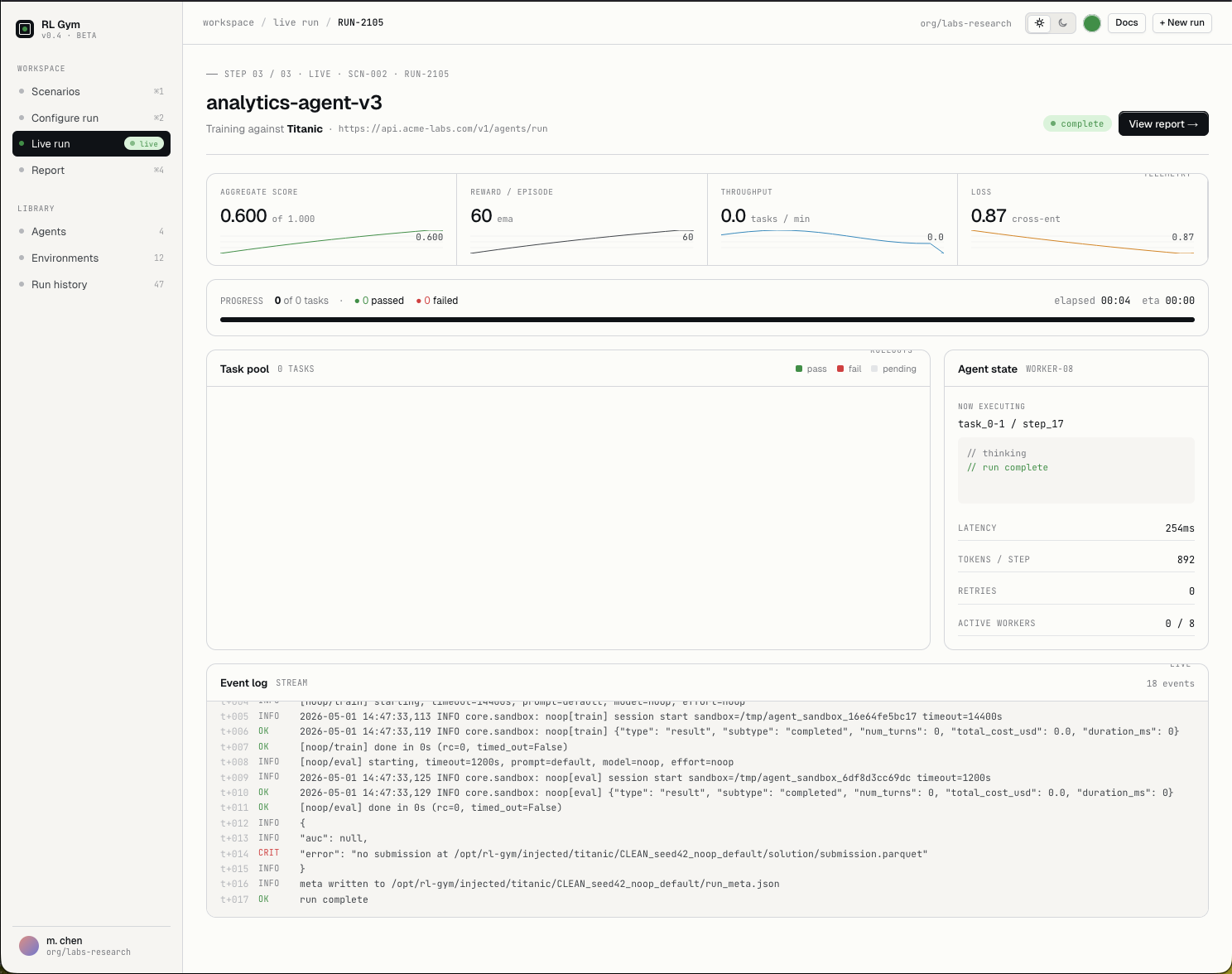
Observe live task pools, event streams, retries, latency, and model state.
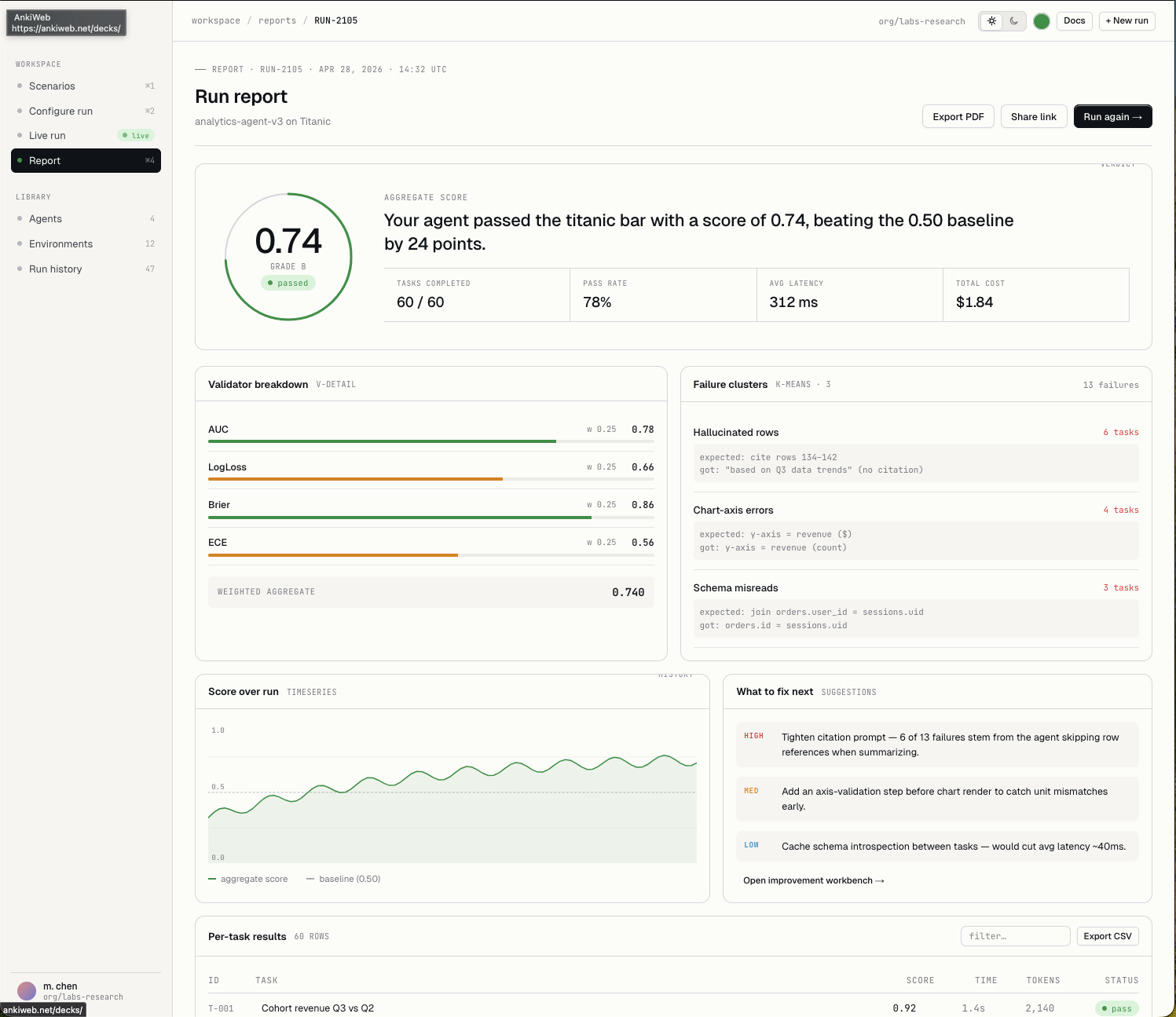
Turn the run into scores, validator breakdowns, failure clusters, and improvement signals.
Next step
Define your problem, the agent used, what you expected to happen, and what actually happened.
Submit it